
Ingredients
1 1/2 to 2 lb pork tenderloin (usually 1–2 pieces)
1/4 cup pure maple syrup
2 tablespoons whole grain mustard
1 tablespoon apple cider vinegar
1 tablespoon olive oil (optional but helps with browning)
1 teaspoon dried rosemary (or 2 teaspoons fresh, finely chopped)
1 teaspoon kosher salt (plus a pinch more for the pork, if desired)
1/2 teaspoon black pepper (optional, to taste)
Cooking spray or a little extra oil for greasing the pan
Directions
Preheat your oven to 400°F (200°C). Lightly grease a roasting pan or a 9×13-inch baking dish with cooking spray or a bit of oil.
Pat the pork tenderloin dry with paper towels. If there is any silver skin on the pork, trim it off with a small sharp knife. Lay the pork tenderloin in the center of the prepared roasting pan.
In a medium bowl, whisk together the maple syrup, whole grain mustard, apple cider vinegar, olive oil (if using), dried rosemary, salt, and black pepper until the mixture is well combined and looks like a thick, pourable sauce.
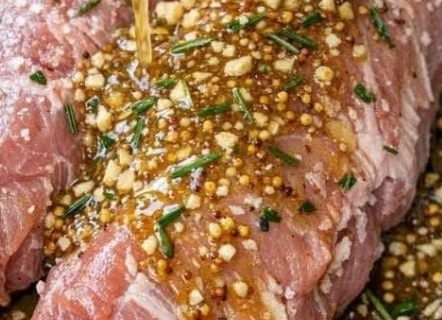
Position the roasting pan on a stable surface. Holding the bowl with both hands, slowly pour the maple-mustard-rosemary sauce all over the raw pork tenderloin, making sure to coat the top and sides. Use a spoon to scoop any sauce from the bottom of the pan back over the pork so it’s nicely covered.
Let the pork sit in the sauce for about 5–10 minutes while the oven finishes preheating. This gives the flavors a little head start on soaking into the meat.
Place the roasting pan in the preheated oven and bake for 20–25 minutes, or until the internal temperature of the thickest part of the tenderloin reaches 145°F (63°C). Spoon some of the pan sauce over the pork halfway through baking to keep it moist and flavorful.
Once the pork reaches 145°F, remove the pan from the oven. Tent the pork loosely with foil and let it rest in the pan for 5–10 minutes. This helps keep the meat juicy and lets the sauce settle.
Transfer the pork to a cutting board and slice it into 1/2-inch thick medallions. Spoon some of the warm maple-mustard sauce from the roasting pan over the slices. Serve right away with your favorite sides, passing any extra sauce at the table.
Variations & Tips
For picky eaters who shy away from mustard, you can cut the whole grain mustard down to 1 tablespoon and add an extra tablespoon of maple syrup for a slightly sweeter sauce. If your family loves herbs, try adding a pinch of thyme or sage along with the rosemary. To make it a one-pan meal, scatter baby potatoes and carrot chunks around the pork before pouring the sauce over everything; just make sure the vegetables are cut small enough to cook through in about the same time as the pork. For a slightly smoky twist, add 1/2 teaspoon smoked paprika to the sauce. If you prefer a thicker, more glaze-like sauce, remove the cooked pork to rest and pour the pan juices into a small saucepan; simmer for a few minutes on the stove until slightly reduced, then spoon over the sliced pork. Leftovers make great sandwiches—pile sliced pork on a bun with a little extra mustard and some pickles for an easy next-day lunch.